Traditional hanbok holds a silhouette no other piece of clothing carries. A short jacket tied at the chest with a long ribbon. A wide skirt that falls from a high waist and moves with the body rather than against it. The architecture is six centuries old, and it still reads as ceremony from across a room.
What gives traditional hanbok its quiet authority is restraint. The fabric drapes; the wearer carries it. The embroidery sits at the cuff, the collar, the closure (never across the field of the chima). This is a short reading of why the form has lasted, and why the people who own one keep it for forty years.
The Hanbok was vital to many cultural rites and festivities throughout Korean history, in addition to its aesthetic value. For example, particular styles of Hanbok were worn for marriages or coming-of-age ceremonies to symbolize significant life transitions. The Hanbok became even more entwined with the fabric of significant events in Korean life as a result of this relationship between clothing and occasion.
Even today, with its significant appearance in national festivals like Korean Independence Day and cultural events, Hanbok has a lasting importance. By encouraging younger generations to embrace their heritage, wearing hanbok acts as a reminder of resiliency and pride in Korean lineage.
Additionally, the Hanbok embodies the turbulent past of Korea, including the Japanese occupation (1910, 1945), when donning a Hanbok became a symbol of resistance and national identity. Thus, the Hanbok serves as a symbol of Korean culture’s perseverance in the face of hardship.
In conclusion, Hanbok’s historical relevance in Korean culture is complex, reflecting how a country has evolved while negotiating its own identity as seen through the prism of traditional clothing.
Important Characteristics of Conventional Hanbok Design
The ageless elegance of traditional Hanbok design is characterized by numerous fundamental features. The Hanbok’s loose-fitting silhouette and basic shape and structure are what make it so appealing. Given its historical context of fulfilling a variety of purposes, from everyday wear to ceremonial dress, this design encourages freedom of movement, which is very crucial.
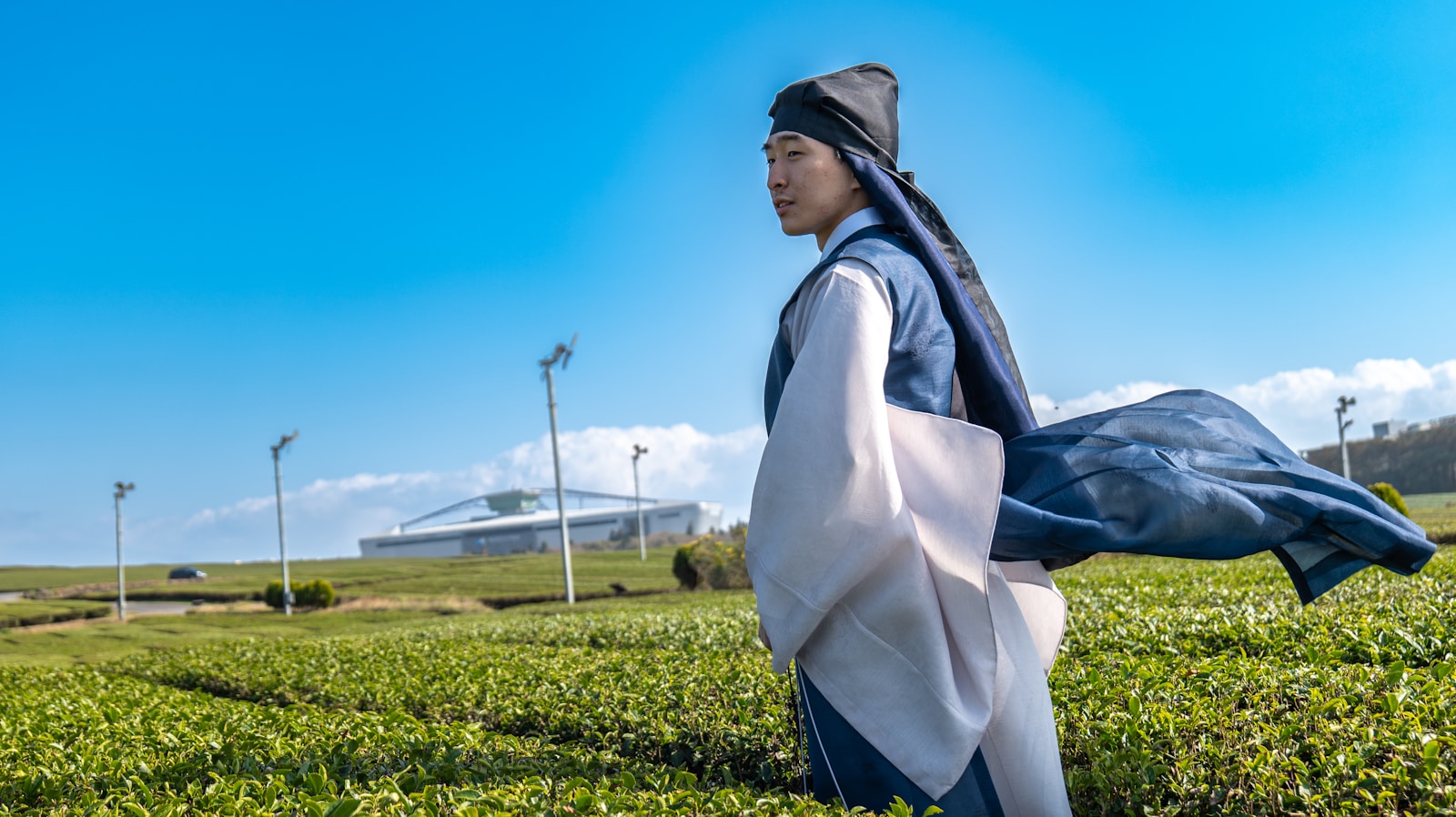
The jeogori (jacket) and the chima (skirt for ladies) or baji (trousers for males) are the two main parts of the Hanbok. In order to draw attention to the waist, the jeogori usually has a short, cropped cut, but the chima falls softly to the ground, giving the impression of being lovely and ethereal. The ease and comfort of men’s baji, on the other hand, highlights the practicality of the Hanbok.
In Hanbok design, color is essential, with vivid shades denoting various meanings. Red, for instance, is linked to luck and happiness, while blue is connected to peace and harmony. Traditionally, the wearer’s background or the occasion determined the colors to choose, allowing for personal expression within the bounds of cultural conventions.
Equally crucial to Hanbok design is the choice of textiles. Materials such as silk, ramie, and cotton, each selected for their own properties and capacity to flow gracefully with movement, have long been favorites of Korean craftspeople. the elaborate embroidery that frequently embellishes Hanbok clothing features natural themes like flowers, animals, and seasonal accents, which enhances the garment’s aesthetic appeal.
Since each traditional Hanbok design is often hand-sewn, demonstrating the artisan’s ability and attention to detail, the designs also display painstaking craftsmanship. The Hanbok is transformed into wearable art by this craftsmanship, which honors the cultural legacy woven throughout each piece of apparel.
Last but not least, the accessories like jeongjag (sashes) and norigae (pendants) add even more elegance to Hanbok. They bring another level of cultural meaning to the ensemble and work well together. They frequently convey tales of family, luck, and love.
Hanbok’s Development Throughout Korean History
Throughout Korean history, the Hanbok has seen substantial changes in response to shifting social, cultural, and political contexts. Hanbok fashions originated in the early eras of their existence and were a reflection of the hierarchical systems of society. The elite wore complex designs and costly fabrics, while commoners wore simpler versions.
The Hanbok continued to develop during the Goryeo Dynasty (918, 1392), gaining more complex designs and hues that were frequently influenced by cultural interactions with nearby nations. The noble class, which favored clothing that conveyed their social standing and elegance, rose to prominence during this time. Adding elaborate embroidery designs and opulent materials, which embodied artistry and prestige, defined this era.
The biggest impact on Hanbok ideology and design came during the Joseon Dynasty (1392-1897). The principles of Confucianism had a significant impact on fashion, resulting in the creation of certain regulations and standards that dictated what people might wear according to their social status. Particularly among the ruling class, the silhouettes grew increasingly rigid, with organized outlines emphasizing propriety and discipline.
Hanbok had to adapt once more as a result of the turbulent times of Japanese colonization and the Korean War that followed, throwing off many of its traditional styles in favor of Western apparel. Globalization notwithstanding, the Hanbok continued to be an integral aspect of Korean identity, frequently donned on important cultural occasions and holidays.
Hanbok saw a renaissance in the late 20th century as a result of a renewed interest in traditional Korean culture. In order to revive the appeal of the garment among younger generations, designers started to reimagine classic styles by fusing traditional components with modern fashion.
In addition to being a traditional garment, the hanbok is currently evolving as a canvas for contemporary designers who are reinventing its function in fashion and cultural representation. This allows the historical significance of the hanbok to be easily integrated into the fabric of Korean contemporary life.
Contemporary Fashion’s Modern Hanbok Reinterpretations
Hanbok has seen a rebirth recently, fusing traditional designs with contemporary sensibilities. Designers have incorporated the traditional Hanbok features·bright colors, flowing forms, and elaborate patterns·into modern clothing items that appeal to a wider range of consumers.
Simplified designs and useful fabrics are the hallmarks of “everyday Hanbok,” one of the most notable modern adaptations. It is simpler for younger generations to appreciate this cultural legacy without sacrificing comfort and style thanks to these clothes, which maintain the essence of traditional Hanbok while being appropriate for daily use.
The inventive use of Hanbok in modern designs, where designers experiment with cuts, patterns, and fabrics and frequently combine aspects from international fashion trends, has been on display in fashion shows and exhibitions. Collaborations between major fashion labels and Hanbok designers have resulted from this, carving out a distinct market niche that appeals to modern preferences while yet celebrating the heritage.
This comeback is mostly due to social media platforms, which enable designers to publish their work and establish connections with a worldwide audience. Influencers and style enthusiasts are presenting their contemporary takes on the Hanbok, igniting a renewed interest in the garment as a fashion accessory as well as a cultural relic.
the entertainment and film industries have had a big impact on the appeal of hanbok, particularly with regard to well-known K-dramas and movies with protagonists dressed in exquisitely crafted hanbok. This portrayal draws interest from viewers and admirers around the world by highlighting the garment’s visual appeal as well as its cultural significance.
Therefore, the contemporary Hanbok modifications aim to bridge the gap between tradition and modern life, guaranteeing that the elegance of the Hanbok endures in the twenty-first century. They are not just about fashion, but also about cultural pride and identity.
Cultural Events Honoring Hanbok’s Magnificence
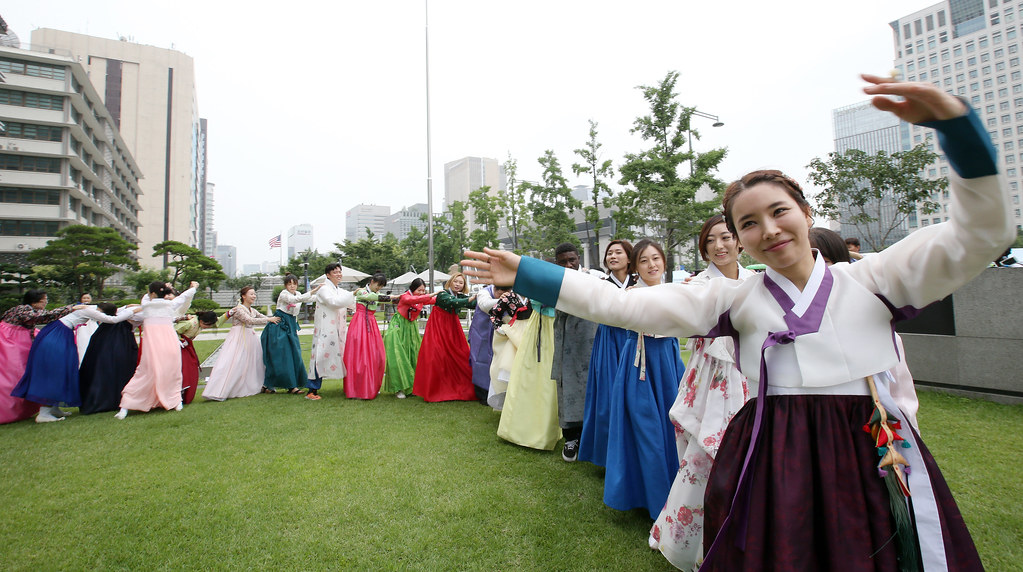
Cultural gatherings honor the beauty and classic elegance of Hanbok both in South Korea and elsewhere. These get-togethers provide Koreans a chance to celebrate their ancestry while demonstrating the garment’s historical significance and artistry. The Korean harvest festival, Chuseok, is one of the most important occasions. Families gather to commemorate their ancestors while dressing traditionally, and Hanbok plays a major role in the festivities.
Another occasion where the Hanbok is essential is Seollal, the Korean New Year. To commemorate the new year and carry out ancestral traditions, families dress in their finest Hanbok. Wearing hanbok at these festivities is customarily associated with hopes for happiness and wealth in the upcoming year, which emphasizes the garment’s cultural significance.
The Hanbok has made a name for itself outside of regional festivities, when Koreans participate in international cultural festivals and display their traditional dress. Such gatherings not only honor Korean heritage but also help a wide range of audiences comprehend and value Korea’s past.
Hanbok-focused fashion events have grown in popularity as well, showing designers who update classic looks for modern audiences. In addition to honoring the artistic merits of Hanbok, these occasions provide a forum for extending the brand’s recognition and appeal in the current international fashion landscape.
Additionally, Hanbok is frequently the subject of exhibitions at institutions and museums, where guests can learn about the artisanship, varieties, and historical significance of the garment. These kinds of programs are essential for enlightening visitors and residents alike about the diverse cultural mosaic that Hanbok embodies.
In conclusion, Hanbok-related cultural activities are essential to maintaining and advancing the garment’s history and enabling people everywhere to recognize its timeless beauty and significance.
How Hanbok Represents Korean Heritage and Identity
A living tribute to the culture, history, and aesthetics of Korea, the Hanbok is an essential component of Korean identity and heritage. Hanbok conveys a sense of pride and belonging in Korean culture with its patterns, hues, and fabric selections. The silhouette of the clothing and the designs stitched onto its fabric are only two examples of how every element of it conveys meaning and stories that the Korean people find particularly meaningful.
Because of Korea’s unique history and the influence of Buddhism, Shamanism, and Confucianism on design decisions, Hanbok is unusual. The abundance of natural components in decorations, such as peonies and cranes, represents wealth, longevity, and good fortune and captures the peaceful coexistence that Koreans have with the natural world.
Additionally, wearing hanbok on important cultural occasions like birthdays, marriages, and holidays helps Koreans maintain their shared culture and collective memory. Wearing hanbok on these occasions promotes a sense of identity that cuts across generations by acting as a reminder of one’s heritage.
Hanbok also symbolizes the Korean people’s tenacity, especially in the face of hardship and colonial domination. People were able to express their individuality against outside influences by dressing traditionally, which became a potent symbol of resistance and cultural preservation. In this sense, hanbok is a sign of pride and unification for the country more than just traditional attire.
Younger generations in today’s culture still find their identity in Hanbok, which connects traditional values with current lifestyles. Young people’s growing interest in Hanbok demonstrates a profound respect for cultural legacy in a world that is becoming more interconnected. Getting back in touch with traditional clothing builds cultural literacy and a sense of pride in one’s heritage.
Simply put, the Hanbok serves as a poignant reminder of the value of legacy in the modern world. It is a rich expression of Korean identity, entwined with the history and cultural ethos of the country.
Tips for Preserving and Caring for Your Hanbok Clothes
Proper care and preservation are vital if you want your Hanbok clothing to retain their beauty and purity. Because vintage clothes frequently feature delicate fabrics and complex craftsmanship, it’s important to handle and store them carefully to keep them in perfect condition for many years to come. These are some crucial pointers for maintaining your hanbok.
First and foremost, make sure you constantly read the Hanbok’s care labels. Since silk and other expensive textiles are used to make many traditional Hanboks, specific cleaning techniques might be needed. If in doubt, think about hiring a specialist in traditional clothing cleaning to prevent harm.
Using a mild detergent and cold water, hand wash your Hanbok at home is the suggested method. Steer clear of harsh chemicals since they may harm the cloth. To clean the clothing, gently stir the water; do not wring or stretch it, since this may cause it to lose its shape.
Hang the Hanbok to air dry after washing in a well-ventilated, shaded place. Colors can fade under direct sunshine, especially bright colors. To maintain its shape, place your Hanbok flat on a fresh, dry cloth if it’s really fragile.
Another important part of keeping your Hanbok intact is storage. Place your Hanbok in a breathable, natural fiber garment bag·like cotton·while it’s not in use. Steer clear of plastic bags since they can retain moisture and cause mildew or mold. Adding silica gel packets to the storage area is a smart idea as well, since they can absorb any extra humidity.
Lastly, keep a constant eye out for any wear or damage on your hanbok. Making small fixes right away can keep them from growing into bigger problems later on. By being proactive, you may maintain the finest possible fit and appearance of your Hanbok clothing for any occasion.
You may celebrate the beauty of this classic clothing and make sure that your Hanbok remains a treasured part of your wardrobe for years to come by adhering to these care and preservation suggestions.
Hanbok’s Worldwide Influence on Current Fashion Trends
Hanbok’s popularity has grown significantly in recent years, piqueing the curiosity of fashionistas, designers, and cultural watchers everywhere. Hanbok has become a symbol of Korean identity in the fashion industry as South Korea cements its status as a cultural superpower with its K-pop, movies, and food.
Designers are starting to include Hanbok features into their catwalk collections, showing the elegant garments at fashion weeks and cultural events across the globe. Hanbok’s distinctive designs and vivid colors have served as an inspiration to global designers, who have created inventive versions that blend traditional Korean aesthetics with current fashion trends.
Social media sites have been essential in increasing Hanbok’s visibility, especially TikTok and Instagram. Celebrities and influencers frequently share their opinions on traditional clothing, which creates conversations about cultural appropriation and respect. Due to this digital exposure, there is a growing demand in buying Hanbok or products inspired by the Hanbok from people all over the world who are eager to learn about Korean culture.
Collaborations between Western fashion firms and Hanbok designers have further aided in the global flow of ideas and fashion. These collaborations act as a bridge between other cultures, modernizing traditional clothing while also encouraging respect and awareness for Korean heritage in the global fashion business.
Beyond just fashion, Hanbok has appeared in movies and TV shows, especially in K-dramas that highlight the elegance of traditional clothing in modern stories. International viewers are becoming more curious about Hanbok’s cultural importance and its place in Korean society as a result of this representation.
Hanbok serves as a reminder of the value of accepting and honoring cultural history as it continues to shape global fashion trends. Korea is promoting its traditional clothing and encouraging a greater awareness of its rich history and identity by exhibiting the grace and creativity of Hanbok on a global scale.
The Hanbok, which embodies grace, heritage, and identity, is still a potent representation of Korean culture. For the Korean people, this traditional clothing represents both their collective heritage and their own sense of self, drawing from both its historical origins and contemporary interpretations. Hanbok illustrates the everlasting links between tradition and modern life as it continues to develop and have an impact on fashion throughout the world. Adopting a Hanbok means celebrating a rich cultural narrative that speaks to people of all ages rather than merely donning a piece of clothing.