Paebaek 폐백
The Korean wedding bow ceremony. Both families, the deep bow, the tossed dates and chestnuts, the words of wisdom from the elders. Read the paebaek guide.


Chuseok and Seollal are the two most important days on the Korean calendar. Chuseok (추석) is the autumn harvest holiday, held on the 15th day of the 8th lunar month. Seollal (설날) is the lunar new year, held on the 1st day of the 1st lunar month. Both center on the same rite (charye, the ancestor ceremony) and the same wardrobe (hanbok on the family), but their sequences, their food, and their emotional register are distinct. One is the harvest moon and remembrance. The other is the new year and the future.
Most Korean American families in the Bay Area hold a version of these days, but many hold a partial version because the physical props (the folding screen, the low table, the ceremonial linens, the specific foods) are not easy to source, and because the sequence (what to bow to, in what order, with what words) does not always survive the diaspora intact. That is the gap we fill. We come to your home, set the ceremony, dress the family, guide the moments, and cook the meal. There is currently no one else in Northern California offering all four together as a single visit.
2
Korean holidays
7
Charye placement rules
14
Bay Area cities
Same day
Eric replies
Chuseok and Seollal are often spoken about together, and their charye rite is largely the same, but the mood and the meaning diverge. Understanding what makes each one distinct is what lets a Korean American family hold both properly.
秋夕
Chuseok · Autumn eveningChuseok is the Sino-Korean reading of 秋 (autumn) and 夕 (evening). The older, purely Korean name is Hangawi (한가위), from han (great) and gawi (middle), because it falls at the middle of the autumn harvest season. Historical records from the Silla dynasty (7th century) describe a month-long weaving contest called gabae (가배), held under King Yuri, the third Silla king. The winning team was hosted to a feast by the losing team. Chuseok as we recognize it grew out of this tradition, and standardized into the modern rite during the Joseon dynasty (1392 to 1910).
Chuseok was banned during Japanese occupation in 1907 as part of the broader suppression of Korean identity. It was fully reinstated as a national holiday in 1989 under President Roh Tae-woo, when the government also formalized the three-day break Korean families still take today.
설날
Seollal · Year-daySeollal is a purely Korean word, without hanja. Seol (설) means 'year of age,' and nal (날) means 'day.' Together, the word marks the day one becomes a year older, because in the Korean traditional age system, every person adds a year on Seollal, regardless of birthday. That is the origin of the tteokguk tradition: eating a bowl marks the year gained.
The lunar new year has been marked on the Korean peninsula since at least the Three Kingdoms period (before 668 CE), with the Book of Sui and Old Book of Tang recording Silla-era new year rites. Like Chuseok, Seollal was suppressed under Japanese occupation and revived in 1989. The traditional customs (sebae bows, seolbim clothing, family games) remain largely intact in modern Korean and Korean American homes.
The physical props do not survive the diaspora intact. The knowledge does not either. That is the gap we fill.
The charye table is not decorative. It is diagrammatic. Every dish sits in a specific place because Korean Confucian tradition assigns a direction, a color, and a hierarchy to each. Any Korean grandmother would spot a miscalibrated table across the room. Below are the seven placement maxims most families care about, in the classical order.
홍동백서
Red foods (jujubes, apples, watermelon) sit on the east side of the table. White foods (pears, radish) sit on the west. Colors map to cardinal directions in Korean cosmology.
어동육서
Fish dishes sit east. Meat dishes sit west. In Korean tradition, fish carries the sunrise register and meat carries the sunset one.
두동미서
When a whole fish is served, the head points east and the tail points west, so the fish appears to be swimming toward the sunrise. Small detail, immediately noticed.
조율이시
The four ceremonial fruits sit in this order from east to west. Chosen for their seed counts. Jujube has one seed (the emperor). Chestnut has three (the three ministers). Pear has six (the six officials). Persimmon has eight (the eight regional lords). A whole Confucian court on one row of fruit.
좌포우혜
The dried meat (pojiv) sits on the left of the table. The sikhye (sweet rice drink) sits on the right. Together they bracket the meal offering.
고서비동
The direction the food is oriented depends on the ancestral hierarchy. Ancestors sit west (the setting sun, the past). Descendants sit east (the rising sun, the future). This governs which way the bowls face.
반서갱동
The rice bowl sits on the west side of the ancestor's setting. The soup bowl sits on the east. This is the reverse of how a living Korean sets a table for a meal, and that reversal is intentional: the charye table is set for the world of the ancestors.
피해
Certain foods are never placed on the charye table. Fish whose names end in -chi (samchi, kalchi) are considered too low. Red pepper and garlic are believed to repel spirits. Peaches are avoided for the same reason. We check for all of these before setting.
Both days center on the charye rite in the morning. What surrounds the charye differs. Below is the full sequence, side by side.
Any Korean grandmother would spot a miscalibrated table across the room.
Every dish carries a specific meaning at Chuseok or Seollal. Mrs. Lee prepares each one to the register the day expects: songpyeon steamed with real pine needles, tteokguk with the broth simmered from scratch, jeon fried in small batches so the edges hold.
Seolbim (설빔) means 'Seollal clothing.' Historically, Korean families made or bought new hanbok for every family member for the new year. The tradition carries into modern practice, though most Korean American families now rent for the day. The palette conventions are strict, and reading them correctly is what makes the family photograph feel right.
About one-third of Korean Americans identify as Christian, primarily Protestant, and Korean Protestant tradition does not practice charye. The offering of food to ancestors is understood as a form of worship reserved for God alone. But the underlying impulse of Chuseok and Seollal (honoring parents, remembering the dead, gathering the family across generations) is fully Christian.
The standard substitute is chudo yebae (추도예배), a Korean Protestant memorial service. The layout differs from charye in three ways. First, there is no food-offering table. A framed photograph of the deceased sits where the charye altar would. Second, the family gathers, but the sequence is prayer, hymn, scripture, and a short shared reflection, rather than bows. Third, the food is not offered to the dead. It is prepared for the living family meal after the service.
We coordinate chudo yebae for Christian families as fluently as we coordinate charye for traditional ones. The hanbok, the family meal, the sebae bows to living elders, and the emotional weight of the day remain. The theology of the moment shifts. Our approach is to ask what your family actually does, and then to hold that day well.
It is not. The comparison is convenient shorthand for American ears, but Chuseok predates Plymouth Rock by roughly sixteen centuries. Its origin is the Silla-era gabae weaving contest, documented in the 7th-century Book of Sui. Chuseok is a harvest holiday with an ancestral rite at its center. Thanksgiving has neither the ritual weight nor the lunar timing. Explaining Chuseok as 'Korean Thanksgiving' loses the whole thing.
Related, distinct. Both fall on the same lunar date (1st day of the 1st lunar month). The rituals, food, and family customs differ meaningfully. Koreans eat tteokguk. The Chinese eat different regional foods. Koreans wear hanbok. The Chinese wear cheongsam or tangzhuang. Korean sebaetdon comes in silk pouches. Chinese hongbao come in red envelopes. Two neighboring cultures marking the same astronomical moment with distinct traditions.
Not culturally. Even secular Korean American families feel the weight of missing Chuseok or Seollal. It is not a Christmas-versus-Chanukah personal-tradition situation. It is a rhythm the year is measured against. Children who do not see grandparents feel it. Grandparents who do not receive bows feel it more.
It does not. Modern Korean and Korean American families adapt widely. Christian families skip charye entirely and hold chudo yebae. Some families skip the food table but keep the sebae. Some families keep the food table but simplify the placement. What holds the day together is the intention, the family, and the meal. The rules give the ceremony its shape. The shape can flex.
There is no one in the Bay Area doing what we do. We are the only ones.
 Eric Lee & Mrs. Lee YoungsookThe atelier, San Mateo
Eric coordinates every ceremony personally. He replies to the first email, holds the timing on the day, and stands at the edge of the room to correct the small missteps. Nothing is delegated. Nobody else is added to the thread.
Mrs. Lee Youngsook, his mother, cooks every dish that leaves our kitchen. She grew up in Korea, setting charye tables with her own mother and helping run family ceremonies as a young woman. What she brings to a day is not a menu. It is a lifetime of watching Korean ceremony done correctly.
The West Coast reference for Korean holiday coordination is Leehwa in Los Angeles, a fifth-generation Korean family. In Northern California, no one else is offering full home-visit Chuseok and Seollal coordination with hanbok, charye setup, catering, and rite guidance in a single visit. Eric coordinates. Mrs. Lee cooks. Neither of us hands the day off.
Mrs. Lee grew up setting charye tables with her own mother in Korea. She reads the placement, corrects the small miscalibrations, and sets the offerings in the order a Korean grandmother would recognize on sight.
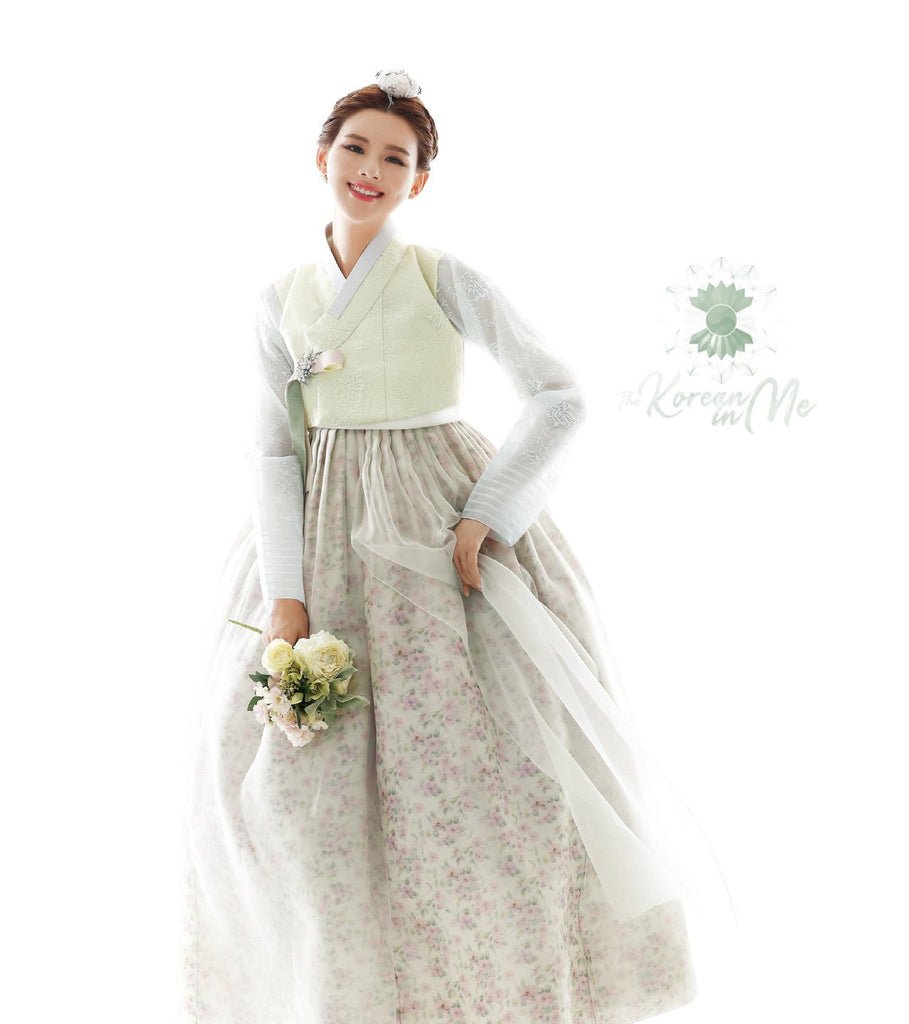
Seolbim palettes for the whole family. Kkachi durumagi for the boys on Seollal. Saekdong for the young children. All sourced from Seoul ateliers we visit twice a year. Sized in advance. Delivered to your home.
Chudo yebae is not a foreign concept to us. Roughly a third of the families we work with are Christian. We set the layout accordingly and hold the day with the same care.
Songpyeon steamed over pine needles for Chuseok. Tteokguk with broth simmered from scratch for Seollal. Jeon fried in small batches. Everything prepared in her kitchen and brought to your home.
Home visits throughout the Bay Area, Peninsula, and Wine Country. We arrive with the folding screen, the table, the linens, the food, and the hanbok. Setup and breakdown on us.
Eric replies personally to every inquiry. Mrs. Lee cooks personally. No back office. No handoff. From the first email to the last plate cleared, you are working with the two of us.
A full holiday coordination covers the ritual layout, the family's hanbok, the meal, and the timing across the day. Below is the standard scope. Every family adjusts it, and the consultation is where we shape it to yours.
An initial video or in-studio conversation covering your date, your family, your traditions (charye or chudo yebae), and your home layout.
Full ceremonial table with byeongpung screen, floor cushions, ceremonial linens, and the correct placement of offerings for the day. Christian layout if applicable.
Coordinated palette for children, parents, grandparents, and extended family. Kkachi durumagi for boys on Seollal.
Eric holds the timeline, cues the moments, and stands at the edge of the room to correct the small details. The Korean role of the 수모 done with warmth.
For Seollal specifically. Rehearsal beforehand for younger children. Cueing on the day for who bows to whom in what order.
Chuseok songpyeon folded together with the family. Seollal tteokguk served at the table. Both are Mrs. Lee's, made from scratch.
The complete Chuseok or Seollal feast for your family. Priced separately based on guest count and menu.
Yut nori, jegichagi, and other traditional games for children. For Seollal we bring the yut sticks and the game mat.
We arrive early, stage the room, run the day, then break it all down. Your family shows up, gets dressed, and holds the moment.
A printed card in English explaining Chuseok or Seollal to non-Korean guests. Common for hybrid Korean American families.
From $750
Standard holiday coordination includes charye or chudo yebae table setup, hanbok rental for the immediate family, and day-of coordination. Every celebration is different. We build the right level of preparation around your family and your day.
Factors that shape your quote
The consultation is complimentary. Tell us the date and venue, and we'll respond with a real quote inside a business day.
Our commitments
The details of your day are shaped in consultation. These are what stay constant.
01
Every ceremony we coordinate is shaped in a first conversation. What you read on this page is a framework. The specific rite, the food, the clothing, and the flow all get decided together, once we understand what your family wants.
02
Photography, video, and family details from your ceremony remain private to you. Nothing appears on our website, social media, or marketing without your written consent. Private is the default, not a request you have to make.
03
For families who want additional privacy, we sign your NDA or provide ours. Discretion is a standard practice here, not a premium tier.
04
Eric holds ServSafe Manager, Proctor, and Instructor certifications. Every meal Mrs. Lee prepares meets California food-handler standards, from her kitchen through service in your home.
05
Eric handles every inquiry, every quote, and shows up on the day of your ceremony. You never get handed off to a coordinator.
06
If a date, scope, or budget is not right for us, we tell you before we quote. We would rather refer you to another team than accept a booking we cannot honor to our standard.
The Korean wedding bow ceremony. Both families, the deep bow, the tossed dates and chestnuts, the words of wisdom from the elders. Read the paebaek guide.
The first birthday. The doljabi table with the brush, the thread, and the coin. Saekdong sleeves on a one-year-old. Read the dol guide.
The 60th and 70th birthdays. Milestone celebrations in Korean culture with their own register. We dress the family, set the table, and hold the day.
Bringing these to the first email means the quote we send back is a real quote, not a guess. Nothing here is a hard requirement. Rough answers are fine.
The exact date if you have one, or a two- or three-week window.
Your home city, or the venue if you already have one booked. Bay Area, Peninsula, or Wine Country lets us map the travel.
How many adults, how many children. Which family members will be dressed in hanbok.
What you already do, what you want to add, what you want to skip. If a grandparent has a specific practice, tell us.
The consultation is where we resolve the unknowns. Bring the questions you do not know the answers to.
Every one of these can be a single sentence. The first email does not need to be long.
A few sentences is enough to start. Chuseok or Seollal, your date, your family size, your city, and what pieces of the tradition matter most to your family. Eric writes back personally, usually inside one business day.
Free consultation · Bay Area & Northern California · Eric replies personally