1960
Life expectancy 53.8
In 1960, the average Korean did not live to see hwangap. The ceremony carried the weight of a genuine achievement. Reaching sixty was cause for the whole family and often the whole village to gather.


Hwangap (환갑) is the traditional Korean sixtieth birthday, marking the completion of one full sixty-year cycle of the Korean zodiac. Gohi (고희) or chilsun (칠순) is the seventieth, drawn from a Tang-dynasty poem that named seventy "rare from ancient times." Both are formal Confucian rites, not birthday parties. The elder is honored. The family bows. Wine is offered. A ceremonial table is set. A meal is shared across generations.
Korean American immigrants of the 1970s and 1980s generation are now reaching these ages, and their US-raised children are the ones organizing the ceremonies. The rites are familiar to grandparents who watched their own parents celebrate hwangap in Korea, and often unfamiliar to the children who now have to hold them. That gap is what we fill. We coordinate the full day: hanbok for the elder and family, the hwangapsang table set correctly, Mrs. Lee's Korean home cooking, and the guided sequence of bows and toasts that turns a birthday into a rite.
60
Zodiac cycle years
9
Table platters
14
Bay Area cities
Same day
Eric replies
還甲
Hwangap · Return of the stemHwangap is the Sino-Korean reading of 還 (return) and 甲 (stem). The word marks the return of the elder's zodiac position after one full sixty-year cycle. Traditional Korean cosmology uses the sexagenary system inherited from ancient China, combining ten Heavenly Stems (천간) and twelve Earthly Branches (지지) into sixty distinct combinations. A person born under one specific combination returns to that same combination on their sixtieth birthday, having lived one full symbolic year of years.
The word is also written hoegap (회갑), used interchangeably in modern Korean. Both refer to the same rite, the formal celebration of reaching sixty.
古稀
Gohi · Rare from ancient timesGohi comes from a line in the Tang poet Du Fu's poem Qujiang (曲江), written in the 8th century: 人生七十古來稀, meaning "life to seventy has been rare from ancient times." The phrase entered Korean vocabulary during the Joseon dynasty and stuck. The seventieth birthday came to be called gohi in reference to the poem, honoring the rarity of reaching that age.
The alternative name is chilsun (칠순), from chil (seven) and sun (a decade), literally "seven decades." Modern Korean and Korean American families use both terms interchangeably. Chilsun is a bit more casual and now more common in everyday speech.
Before the twentieth century, reaching sixty was extraordinary. Life expectancy in Korea in 1960 was 53.8 years. Reaching sixty meant surviving disease, war, and hardship that most did not. The hwangap was not a party. It was a public thanksgiving for a life that had beaten the odds.
1960
In 1960, the average Korean did not live to see hwangap. The ceremony carried the weight of a genuine achievement. Reaching sixty was cause for the whole family and often the whole village to gather.
2023
Modern Korea has one of the highest life expectancies in the world. Sixty is now the middle of an active adult life, not its final stretch. The register of hwangap has shifted, with many families now holding the largest celebration at seventy or eighty instead.
지금
The ritual grammar has not changed. The hanbok, the ceremonial table, the seniority bows, the heonsu toast, the miyeok-guk. These survive across all four modern venues (home, restaurant, banquet hall, church hall) and across all four milestone ages (60, 70, 80, 90).
A full hwangap or gohi runs three to five hours from the honoree's arrival to the last plate cleared. The ceremonial pieces take about an hour. The rest is family and food. We hold the timing so nobody in the family is checking a watch and the elder is never rushed.
We arrive early, set the folding screen behind the elder's seat, build the ceremonial table with nine to twelve towered platters of food, and lay the ceremonial linens. The room is ready before any guest arrives.
The honoree changes into ceremonial hanbok. Men in a formal dopo or hoehong wonsam-style overcoat with the black gat. Women in a formal jeogori and chima in a distinguished ceremonial color, sometimes with a small ceremonial jokduri. Attendants help with the goreum and the fit.
The elder takes the seat of honor in front of the byeongpung, with the hwangapsang before them. The family arranges around, in seniority order. Grandchildren typically closest to the elder, then children, then extended family.
Traditionally the eldest son bows first, kneeling in the deep formal bow (큰절), forehead to the floor, held for a beat. Then the eldest son's wife. Then younger children in seniority order. Then the grandchildren. Each bow is quiet, deliberate, and complete before the next begins.
The heonsu (헌수) is the ceremonial toast. Each family member kneels before the elder, offers a small cup of wine (soju or cheongju) with both hands, and speaks a short blessing. The elder receives the cup, sips, and responds. The heonsu is often the most emotional part of the day, and often the part the grandchildren remember most clearly as they grow up.
After the toasts, the eldest son or another designated family member offers a longer speech honoring the elder's life. Photographs of the elder as a child, as a young parent, in Korea, are sometimes displayed. If elders are participating over video from Korea, this is when they speak too.
Mrs. Lee brings out the miyeok-guk (seaweed soup) at the start of the meal. This is the birthday soup every Korean eats. On a milestone birthday, it carries the additional meaning of thanking the mother who gave the elder their life. Warm, simple, deeply meaningful.
Galbijjim, japchae, jeon, seasonal banchan, songpyeon or yakgwa. The full Korean family meal at the elder's register. Prepared in Mrs. Lee's kitchen and served at your table.
The frames that get printed and hung. Elder alone. Elder with spouse. Elder with children. Elder with grandchildren. Full extended family. These are the photographs that will live on the wall of every family member's home.
Before the twentieth century, reaching sixty was extraordinary. The hwangap was not a party. It was a public thanksgiving.
The hwangapsang (환갑상, elder's birthday table) is the ceremonial centerpiece. Nine to twelve platters of food, each stacked to a specific height. In Korean tradition, height of the platter carries the meaning of respect. The taller the tower, the deeper the honor being paid. Mrs. Lee builds the towers to the traditional Confucian register.
대추
Stacked into a small architectural tower bound with red thread. Symbol of fertility, prosperity, and continuation of the family line. In the ancestral vocabulary, jujube represents the emperor.
밤
Whole, unpeeled, arranged in the classical order. Symbol of strength and protection. In the Confucian court metaphor, chestnut represents the three ministers.
감
Fresh or dried, stacked. Symbol of shared endurance. Persimmon trees must be grafted to bear sweet fruit, so the persimmon signifies the wisdom taught across generations.
약과
Honey-fried wheat cookies. Court-register sweet, historically served only at the most formal Korean tables. Symbol of wealth and refinement.
떡
Rice cakes stacked into a full tower. The tteok tower carries the weight of the whole table. Songpyeon, injeolmi, and the seasonal ceremonial varieties. Height signals honor.
전
Savory pancakes stacked in the classical arrangement. Beef, zucchini, mung bean. Symbol of the family's hospitality made physical.
과일
Apples, pears, oranges, and seasonal fruit arranged in pyramids. The traditional Korean fruit pyramid is difficult to build correctly. Mrs. Lee builds them to the classical form.
건어
Dried yellow croaker or pollock, ceremonially arranged. Symbol of abundance and the sea's blessing.
강정
Puffed rice sweets bound with honey syrup, formed into small blocks. Symbol of sweetness and celebration. Historically served at royal and yangban feasts.
Hwangap and gohi hanbok sits between daily wear and full court ceremonial. The register is dignified but not royal. The elder wears the most distinguished formal hanbok. The family coordinates in respectful palettes, one shade off from the honoree.
Korean tradition marks specific milestone birthdays across a life. Below is the classical sequence. Every family emphasizes different points in this list. We coordinate any of them, in the appropriate register.
백일
The 100th day of a baby's life. Historically a survival milestone. Marked with baekseolgi (white rice cake), which is shared with 100 people to bring the child good fortune.
돌
The first birthday. The doljabi table, the saekdong hanbok, the family photograph. Read the dol guide.
환갑
The sixtieth birthday. Return of the zodiac cycle. The classical high-formal Korean birthday, though modern practice has moved the biggest celebration to gohi or palsun.
고희
The seventieth birthday. From Du Fu's line "life to seventy has been rare from ancient times." Increasingly the largest celebration in modern Korean American families.
팔순
The eightieth birthday. Now the most common "big" celebration for modern Korean American families whose elders reach 80 with health intact.
구순
The ninetieth birthday. Held more intimately, often at home, with the immediate family. The register is deeper, the ceremony quieter.
백수
The ninety-ninth birthday. The name is a pun: baek (white) suggests baek (hundred) minus one stroke. Rare and deeply honored.
상수
The centenarian's birthday. Held with the register of the extraordinary. Rare in previous generations. Increasingly seen now.
The 1970s and 1980s Korean immigrants are reaching hwangap and gohi right now. Their US-raised children are the ones organizing the day.
The classical hwangap of 1950s Korea was held at home, ran a full day, drew the extended family and often the whole village. The modern Korean American version has adapted around three realities: elders now live decades past sixty, families are geographically distributed, and the ritual props are not always at hand. The register has shifted, but the grammar has not.
Many modern families hold a smaller family meal at hwangap and reserve the full multi-generational celebration for gohi at 70 or palsun at 80. The reasoning is simple. The elder has lived long enough that the extraordinary-achievement register moved with them.
Homes shrunk. Family sizes grew. Many hwangap celebrations now happen in restaurant private rooms, banquet halls, or Korean church halls. The ritual pieces (the hanbok, the ceremonial table, the bows) work in all three settings when set correctly.
Many Korean American elders have siblings and parents still in Korea who cannot travel. Video calls timed to the heonsu toast are increasingly common. We hold the timing so the elders in Korea participate in real time.
No one else in the Bay Area coordinates hanbok, the ceremonial table, Korean home cooking, and the guided bows as a single home visit.
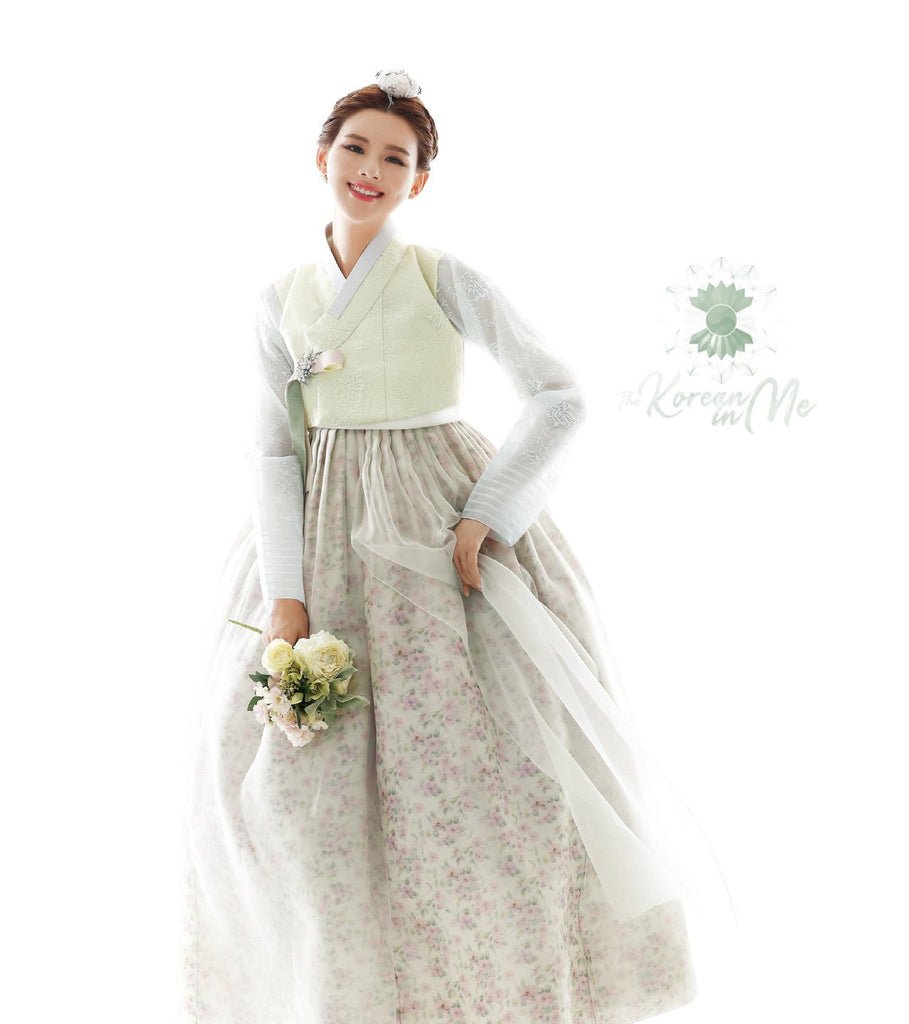 Eric Lee & Mrs. Lee YoungsookThe atelier, San Mateo
Eric coordinates every ceremony personally. He replies to the first email, holds the timing on the day, and stands at the edge of the room to correct the small missteps. Nothing is delegated. Nobody else is added to the thread.
Mrs. Lee Youngsook, his mother, cooks every dish that leaves our kitchen. She grew up in Korea, setting charye tables with her own mother and helping run family ceremonies as a young woman. What she brings to a day is not a menu. It is a lifetime of watching Korean ceremony done correctly.
The Bay Area has Korean caterers, Korean restaurants with private rooms, and one out-of-region hanbok atelier (Leehwa in Los Angeles). None combine all four elements of a proper hwangap or gohi in a single home visit. Eric coordinates. Mrs. Lee cooks. Neither of us hands the day off.
Not off-the-shelf. Not costume. Dopo, gat, dangui, jokduri sourced from Seoul ateliers we visit twice a year. The register reads as scholar-official, not entertainer.
Mrs. Lee builds the towered platters to the traditional Confucian register. Height matters. The visual weight of the table is what signals the depth of honor. No one else in the region does this on a home visit.
Eric holds the timing, cues the family, corrects the small missteps. The ceremony choreography that Korean grandparents remember from their own parents' celebrations. Nobody in the family should be reading a script during the elder's day.
Miyeok-guk first, prepared warm and served with intention. Then galbijjim, japchae, jeon, the full family feast. Prepared in her kitchen the day before and brought to your home or venue.
We coordinate live video calls timed to the heonsu toast so the elder's parents and siblings in Korea participate in the ceremony. In our experience, this is often the day's most emotional moment.
Eric replies personally. Mrs. Lee cooks personally. No back office. No coordinator handoff. From the first email to the last plate cleared, you are working with the two of us.
A full milestone-birthday coordination covers the wardrobe, the ceremonial table, the guided ceremony, and the feast. Below is the standard scope. Every family adjusts it, and the consultation is where we shape it to yours.
An initial video or in-studio conversation covering the elder, the date, the venue, the family composition, and the register the family wants to strike.
Formal ceremonial hanbok in the honoree's chosen register. Dopo and gat for men, dangui and jokduri for women. Sized in advance, delivered to the venue.
Adult children, in-laws, and grandchildren coordinated in a shared palette one shade lighter than the honoree.
Ceremonial folding byeongpung screen, floor cushions, ceremonial linens, and the nine to twelve towered platters built by Mrs. Lee to the classical form.
Eric holds the timeline, cues the bows in seniority order, guides the heonsu toast, and stands at the edge of the room to correct the small details.
Mrs. Lee's seaweed soup served warm at the start of the meal. The single most emotionally weighted food of the Korean birthday.
Galbijjim, japchae, jeon, banchan, seasonal dishes, tteok. Priced separately based on guest count and menu.
We handle the video call timing so the elders in Korea participate in the heonsu toast in real time.
We arrive early, stage the room, run the ceremony, then break it all down. Your family shows up, gets dressed, and holds the moment.
Printed cards in English explaining the ceremony for non-Korean guests, so the day reads as significance, not spectacle.
From $1,200
Standard hwangap or gohi coordination includes formal hanbok rental for the honoree, the hwangapsang table setup, miyeok-guk, and day-of coordination. Every celebration is different. We build the right level of preparation around your family and your day.
Factors that shape your quote
The consultation is complimentary. Tell us the date and venue, and we'll respond with a real quote inside a business day.
Our commitments
The details of your day are shaped in consultation. These are what stay constant.
01
Every ceremony we coordinate is shaped in a first conversation. What you read on this page is a framework. The specific rite, the food, the clothing, and the flow all get decided together, once we understand what your family wants.
02
Photography, video, and family details from your ceremony remain private to you. Nothing appears on our website, social media, or marketing without your written consent. Private is the default, not a request you have to make.
03
For families who want additional privacy, we sign your NDA or provide ours. Discretion is a standard practice here, not a premium tier.
04
Eric holds ServSafe Manager, Proctor, and Instructor certifications. Every meal Mrs. Lee prepares meets California food-handler standards, from her kitchen through service in your home.
05
Eric handles every inquiry, every quote, and shows up on the day of your ceremony. You never get handed off to a coordinator.
06
If a date, scope, or budget is not right for us, we tell you before we quote. We would rather refer you to another team than accept a booking we cannot honor to our standard.
The Korean wedding bow ceremony. Both families, the deep bow, the tossed dates and chestnuts, the words of wisdom from the elders. Read the paebaek guide.
The first birthday. The doljabi table with the brush, the thread, and the coin. Saekdong sleeves on a one-year-old. Read the dol guide.
The two Korean holidays. Charye table, sebae bows, songpyeon, tteokguk, the family meal. Read the Chuseok & Seollal guide.
Bringing these to the first email means the quote we send back is a real quote, not a guess. Nothing here is a hard requirement. Rough answers are fine.
The exact date if you have one, or a two- or three-week window.
Your home city, or the venue if you already have one booked. Bay Area, Peninsula, or Wine Country lets us map the travel.
How many adults, how many children. Which family members will be dressed in hanbok.
What you already do, what you want to add, what you want to skip. If a grandparent has a specific practice, tell us.
The consultation is where we resolve the unknowns. Bring the questions you do not know the answers to.
Every one of these can be a single sentence. The first email does not need to be long.
A few sentences is enough to start. The elder, the milestone birthday, the date, the venue, the family size. Eric writes back personally, usually inside one business day.
Free consultation · Bay Area & Northern California · Eric replies personally