효
Filial piety
Children owe lifelong honor to their parents. Marriage does not end that obligation. It doubles it. The bride and groom gain a second set of parents, and paebaek is the moment of formal acceptance.


Paebaek is the small ceremony inside a Korean wedding where the couple bows to both families, serves them tea or cheongju, and receives blessings. It runs fifteen to thirty minutes. It is often the most emotional part of the whole day.
Most Korean American families do not grow up doing paebaek. The order of the bows, what belongs on the table, when the tea gets poured, who gets bowed to first, all of it either gets handed down or it gets lost. We coordinate paebaek ceremonies across the Bay Area and Northern California, and we treat it the way it deserves to be treated. As one of the oldest surviving Korean wedding rites, not a photo op.
15
Minute rite
9
Table offerings
14
Bay Area cities
Same day
Eric replies
幣帛
Ceremonial gift · Silk clothThe word predates the wedding tradition by centuries. 幣 (pae) means ceremonial gift. 帛 (baek) means silk cloth. Together, the phrase referred to formal offerings of value presented to honored people in diplomatic and state ceremonies during the Goryeo and Joseon eras.
The wedding rite borrowed the same concept. The bride offered gifts of silk and food to the groom's parents, and by that act, offered herself in respect to the family she was joining. The ceremony was never about throwing dates and chestnuts. It was about presenting yourself, with humility, to a family that is now yours.
Understanding paebaek requires understanding the values it was built around. Neo-Confucian Joseon-dynasty Korea saw marriage as the joining of two family lines, not the union of two individuals. Every element of the ceremony carries that inheritance.
효
Children owe lifelong honor to their parents. Marriage does not end that obligation. It doubles it. The bride and groom gain a second set of parents, and paebaek is the moment of formal acceptance.
예
Every bow, every cup, every word, every gift is performed with intention. Nothing is random. The choreography carries the meaning. Get the order right and the ceremony holds. Get it wrong and it flattens into performance.
가족
Western weddings emphasize the couple. Korean weddings emphasize the families. Paebaek is where that difference becomes visible. Parents are seated. The couple bows. The families are joined out loud.
The ceremony was never about throwing dates and chestnuts. It was about presenting yourself, with humility, to a family that is now yours.
A proper paebaek table carries nine specific offerings. Nine is the number of completeness in Korean cosmology. Each element carries a symbol the elders read as they see the table. Historically the bride's mother prepared the entire spread. We source, arrange, and set the table so the symbols read correctly.
대추
Red dates, most often stacked into architectural towers bound with red and blue thread. Fertility, prosperity, and diligence. In many families, the wish for sons.
밤
Whole, unpeeled, mixed with the jujubes. Strength, protection, continuation of the family line. In many families, the wish for daughters.
육포
Handcrafted, pressed into geometric shapes or pine tree and crane motifs. Offered to the groom's mother, a plea to accept the bride with a soft heart.
구절판
An octagonal wooden tray with nine distinct anju: pine nuts, candied walnuts, dried fish, more. Harmony, wholeness, comprehensive wealth. Offered to the groom's father.
곶감
Grafted together or arranged deliberately. Persimmon trees must be grafted to bear fruit, so gotgam signifies two lives growing as one. Marital resilience.
약과
Honey-fried wheat cookies, historically served at noble weddings. Wealth, celebration, sweetness of the union.
청주
Clear rice wine or high-grade tea, poured by the couple, offered to the elders with both hands. The formal seal of the alliance between the two families.
수정과
Cinnamon punch and sweet rice drink. Harmony, sweetness, the daily hospitality of the Korean home offered up in ceremonial form.
절수건
The embroidered cloth the couple holds between them to catch the dates and chestnuts thrown by the elders. Not food, but part of the manifest.
Operational note. Real fruit towers are heavy, expensive, and eaten by no one. Most modern paebaek setups use high-end wax or silicone tower stand-ins for staging, with small bowls of real dates and chestnuts for the toss itself. We keep both options on the table for the conversation.
A modern paebaek runs fifteen to thirty minutes. The choreography is strict but the mood is warm. Silent bows, then laughter at the toss, then a quiet moment when the elders give the blessing. We walk both families through the flow the day before so no one is figuring it out during the ceremony itself.
Groom's parents first, in the traditional order. Grandparents seated to the side or standing. The folding screen (byeongpung) already in place behind them, the low red-lacquered table already set with the nine offerings, the brass tea vessels ready.
The bride in the heavy embroidered outer robe, the groom in the blue silk danryeong and stiff samo hat. Attendants stand near the bride because the hwarot weighs enough that she will need physical assistance to lower into the deep bow and rise from it.
The deepest bow in Korean culture. The groom kneels in the standard form. The bride performs the more elaborate version: hands raised to forehead, then lowered to the floor, then a full seated prostration. Held for a beat. Then a return to standing, again with help. This bow is the axis of the whole ceremony.
The bride pours for the father-in-law. The groom pours for the mother-in-law. Both hands on the cup. This is the physical grammar of respect in Korean culture. The elders drink, and by drinking, accept.
Parents share marriage advice, family values, and their wishes for the couple. This part is often the most quietly emotional moment of the day. The white envelopes with the monetary blessings are handed over here or immediately after.
The elders grab a handful of jujubes and chestnuts and throw them toward the couple. The couple catches what they can in the held white cloth or the bride's wide skirt. The count is playfully read as a prediction of children. This is the part everyone remembers. It is also the part that has become the whole ceremony in Western minds, when it is actually one moment inside a longer rite.
Historically only the groom's family received the bows. Modern paebaek is a mutual family integration. The groom's parents step out. The bride's parents take the cushions. The sequence repeats. Grandparents and other elders may follow in the same pattern.
The ceremony often closes with the couple sharing a single date. The bride holds one end in her teeth, the groom bites the other, they pull. Folklore says whoever comes away with the pit will hold the primary voice in the household. The room usually laughs.
In many modern paebaek ceremonies, the groom piggybacks the bride (and sometimes his mother, and sometimes his new mother-in-law) around the table. A playful test of stamina and willingness to carry the household. Then the formal family portraits, which will be printed and framed and kept.
Fifteen minutes of silent bows, warm laughter at the toss, and a quiet moment when the elders speak. Then a family is joined.
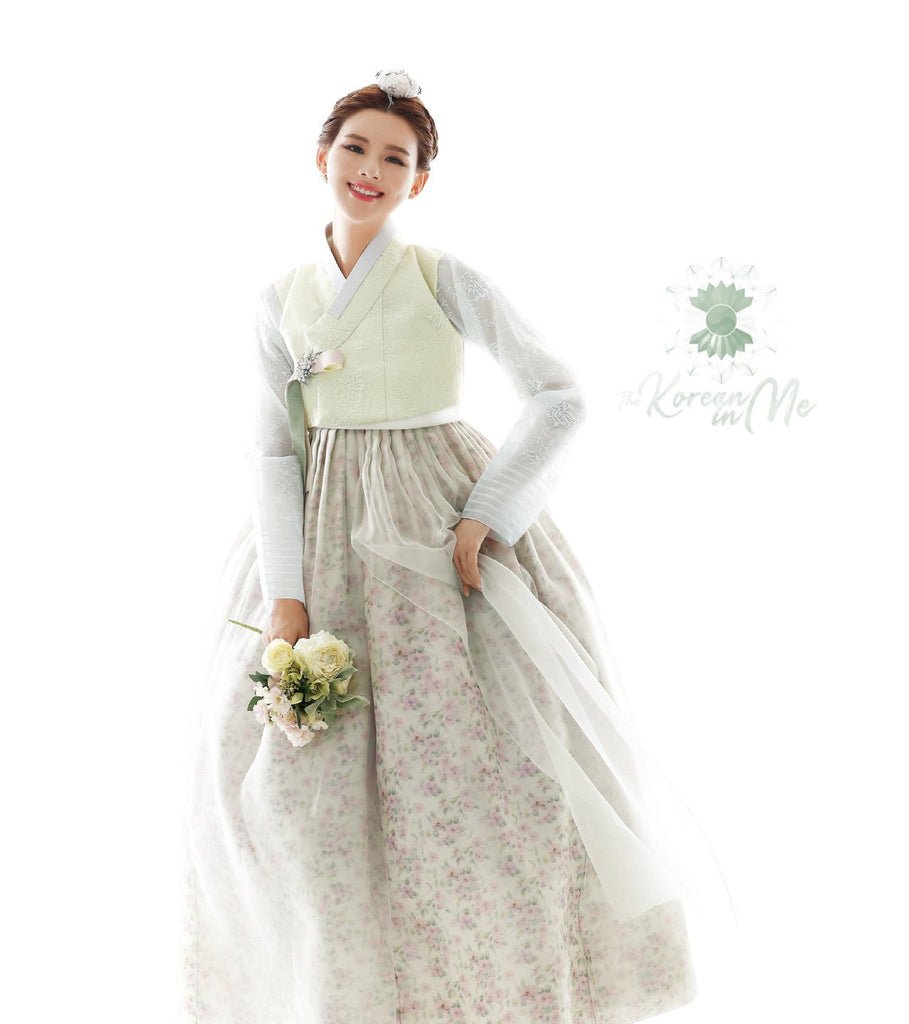
Paebaek attire sits at the court-level end of the hanbok spectrum. This is not the daily-wear register. This is the closest a modern Korean American family gets to Joseon-court ceremonial dress. Every piece has a name, a symbolism, and a place in the sequence.
Most Korean American couples rent the hwarot and samogwandae for the paebaek portion only, then change back into their reception attire. We coordinate the rental, the sizing, the delivery to the venue, and the return the following week.
The paebaek Korean American couples hold today is not exactly the paebaek of Joseon Korea, and that is appropriate. Ceremony evolves. What matters is that the values underneath (respect, family integration, blessing) survive the changes.
Historically only the groom's family received the bows, because the bride was joining that household. Modern paebaek almost always includes both sides. Grandparents. Aunts and uncles. The rotation adds fifteen minutes and doubles the emotional weight.
In South Korea, paebaek is often executed in a fifteen-minute private ceremony in a side room during the transition to the banquet. In American weddings, we often frame it as a centerpiece during the cocktail hour, where non-Korean guests can watch and understand what they are seeing.
A Korean American couple with a Western ceremony can still hold a proper paebaek. We work with couples doing full Korean weddings, hybrid weddings, and Western weddings that want the paebaek portion as a single ceremonial anchor. All three are valid.
The toss is folklore. The ceremony is family acceptance. The number of dates and chestnuts caught predicts nothing. That reading emerged as a light moment inside a deeply serious rite, and Instagram flattened it into the whole thing.
Historically paebaek was one of the most solemn moments in the marriage. The deep bow (큰절) is among the most profound expressions of respect in Korean culture. It is warm and joyful in the modern form, but the weight underneath is real.
No. Many Korean American couples hold a Western ceremony and add paebaek as the Korean cultural anchor of the day. This is common. This is welcome. The rite stands on its own.
Historically true. Culturally outdated. The modern paebaek honors both families, and any coordinator who tries to run it any other way is not paying attention to how the ceremony has actually evolved in Korean American practice.
Perhaps a dozen people in Northern California can run this ceremony with cultural authority and modern taste. We are among them.
 Eric Lee & Mrs. Lee YoungsookThe atelier, San Mateo
Eric coordinates every ceremony personally. He replies to the first email, holds the timing on the day, and stands at the edge of the room to correct the small missteps. Nothing is delegated. Nobody else is added to the thread.
Mrs. Lee Youngsook, his mother, cooks every dish that leaves our kitchen. She grew up in Korea, setting charye tables with her own mother and helping run family ceremonies as a young woman. What she brings to a day is not a menu. It is a lifetime of watching Korean ceremony done correctly.
Paebaek coordination in Northern California is small, quiet, and deeply personal work. There are perhaps a dozen people in the region who can run this ceremony with cultural authority and modern taste. We are among them, and we do it as a family. Eric coordinates. Mrs. Lee cooks and holds the ritual. Together we have run paebaek ceremonies for families across San Mateo, San Francisco, Palo Alto, Oakland, San Jose, and up into Napa and Sonoma.
Mrs. Lee sets the pyebaek-sang the way her own mother set it in Korea, and the way her own mother-in-law inspected it. There is no substitute for a Korean-born woman in her sixties reading the arrangement of the offerings and correcting it. That is what happens in our setup.
The hwarot and samogwandae we place are not off-the-shelf costumes. They are ceremonial pieces sourced from Seoul ateliers we visit twice a year. The embroidery reads at the right register. The rental fit is tailored, not draped.
We run the rehearsal the day before. We hold the timeline on the day. We stand at the edge of the room to correct the bow position, to nudge the cup direction, to remind the elders of the sequence. Nobody in the family should be reading a script during the ceremony.
We travel throughout the fourteen-city Bay Area service area, and up into Wine Country and the Peninsula. Setup is on us. Breakdown is on us. Your family shows up, gets dressed, and holds the ceremony.
Many families add a small Korean spread of japchae, mandu, and yak-sik for the immediate family after paebaek. Mrs. Lee prepares and delivers. This is often the meal the grandparents remember.
Eric replies personally. Mrs. Lee cooks personally. There is no back office, no coordinator handoff, no vendor relay. From the first inquiry to the packup after the ceremony, you are working with the two of us.
A full paebaek coordination package covers the wardrobe, the table, the ritual, and the timing. Below is the standard scope. Almost every ceremony we run adjusts it, and the consultation is where we shape it to your day.
An initial video or in-studio conversation covering your ceremony type, family composition, venue, timeline, and cultural preferences.
Hwarot or wonsam for the bride, samogwandae for the groom. Including jokduri, samo, gwandae, and mokhwa. Sized in advance. Delivered to the venue.
Wonsam for mothers, jeogori sets for aunts and grandmothers, saekdong-adjacent pieces for children. Coordinated from the atelier collection.
Low lacquered table, folding byeongpung screen, floor cushions (bangsuk), brass tea set (dagi), the nine offerings, the white catching cloth. Real, staged, or hybrid, at your preference.
A one-hour walkthrough of the sequence with the couple and both sets of parents. The bows, the cup directions, the seating order, the toss. Confidence before the day.
Eric holds the timeline, cues the elders, corrects the bow position, prompts the family through each step. The Korean role of the 수모 (ceremony director) done with authority.
We work with your photographer or recommend one. We know which moments matter. The first bow. The tea pour. The toss caught mid-air. The grandparents laughing.
Korean spread for the immediate family after paebaek. Japchae, mandu, yak-sik, banchan. Prepared in her kitchen. Delivered to the venue.
We arrive early, stage the room, run the ceremony, then break it all down and take it home. Your family gets dressed and holds the moment. That is the only work asked of you.
Optional. A printed card in English explaining paebaek to non-Korean guests, so the ceremony reads as significance, not spectacle.
From $1,800
Standard paebaek coordination includes hanbok rental for the couple, the pyebaek-sang table setup, day-of choreography, and the rehearsal. Every celebration is different. We build the right level of preparation around your family and your day.
Factors that shape your quote
The consultation is complimentary. Tell us the date and venue, and we'll respond with a real quote inside a business day.
Our commitments
The details of your day are shaped in consultation. These are what stay constant.
01
Every ceremony we coordinate is shaped in a first conversation. What you read on this page is a framework. The specific rite, the food, the clothing, and the flow all get decided together, once we understand what your family wants.
02
Photography, video, and family details from your ceremony remain private to you. Nothing appears on our website, social media, or marketing without your written consent. Private is the default, not a request you have to make.
03
For families who want additional privacy, we sign your NDA or provide ours. Discretion is a standard practice here, not a premium tier.
04
Eric holds ServSafe Manager, Proctor, and Instructor certifications. Every meal Mrs. Lee prepares meets California food-handler standards, from her kitchen through service in your home.
05
Eric handles every inquiry, every quote, and shows up on the day of your ceremony. You never get handed off to a coordinator.
06
If a date, scope, or budget is not right for us, we tell you before we quote. We would rather refer you to another team than accept a booking we cannot honor to our standard.
A full traditional Korean wedding contains several rites. Modern couples often keep paebaek as the anchor and simplify or skip the rest. If you want to add either of these, we can coordinate them alongside the paebaek.
The groom's family presents a wooden goose (gireogi) to the bride's family. Geese mate for life. The gesture symbolizes the groom's promise of fidelity. Historically the opening rite of the wedding day.
The couple shares wine from a single gourd cut into two halves and rejoined. Two lives, one vessel. The physical ceremony of union. Often performed alongside paebaek in Korean American weddings.
A traditional Korean wedding runs closer to two hours across all rites. For couples doing a full Korean ceremony, we coordinate the entire sequence. For hybrid or Western weddings, paebaek alone is usually the right choice.
Bringing these to the first email means the quote we send back is a real quote, not a guess. Nothing here is a hard requirement. Rough answers are fine.
The exact date if you have one, or a two- or three-week window.
Your home city, or the venue if you already have one booked. Bay Area, Peninsula, or Wine Country lets us map the travel.
How many adults, how many children. Which family members will be dressed in hanbok.
What you already do, what you want to add, what you want to skip. If a grandparent has a specific practice, tell us.
The consultation is where we resolve the unknowns. Bring the questions you do not know the answers to.
Every one of these can be a single sentence. The first email does not need to be long.
A few sentences is enough to start. The date, the venue, the family size, and what you already know about the ceremony. Eric writes back personally, usually inside one business day, with a real quote and the shape of what the day looks like.
Free consultation · Bay Area & Northern California · Eric replies personally